The practest.com.pl website uses cookies that can be used by research and advertising companies to ensure maximum convenience in using the website.


EXAT – Computer Test for ADHD diagnosis
One minute reading • Tuesday, March 24, 2026
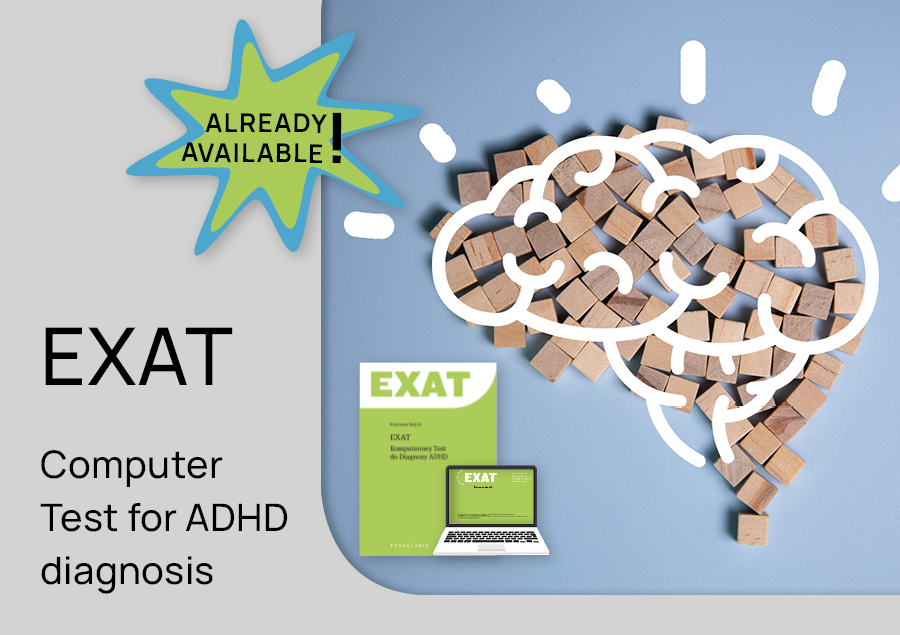
We are pleased to announce that EXAT – a computerized test for the assessment of ADHD – is now available for purchase.
EXAT operates as an e-test on the Epsilon computer platform, enabling computerized administration, automatic scoring, and the generation of a comprehensive report.
EXAT is a modern diagnostic tool designed to assess cognitive functions associated with Attention-Deficit/Hyperactivity Disorder (ADHD) in children and adolescents aged 7 to 18 years. The tool was developed by Dr. Radosław Wujcik at the Pracownia Testów Psychologicznych PTP.
The role of the EXAT test in the ADHD diagnostic process:
- The theoretical framework of EXAT refer to contemporary neurocognitive models of ADHD.
- EXAT focuses on the assessment of executive functions, attention, and cognitive control.
- The test consists of three distinct tasks that provide quantitative indices and reaction time measures, enabling precise analysis of cognitive deficits.
- Test scores are interpreted based on age-specific normative data, enhancing the quality and validity of the diagnostic process.
EXAT can be used in the diagnosis of ADHD, the differential assessment of cognitive difficulties associated with other disorders, as well as in scientific research.
Learn more about EXAT
Learn more about the Epsilon platform
Other news

МИ З ВАМИ!
We are in solidarity with Ukraine!

Merry Christmas and Happy New Year with many thanks for past and future partnership
Pracownia Testów Psychologicznych PTP


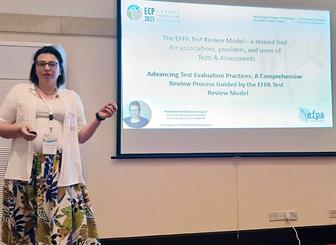
European Congress of Psychology 2025
The completion of the update of the document setting the quality standards for psychological tests in Europe was officially announced
e-SENA
Child and Adolescent Diagnosis System SENA in the computer research version on the Epsilon platform